Engineering Portfolio.

In Action — Project Footage
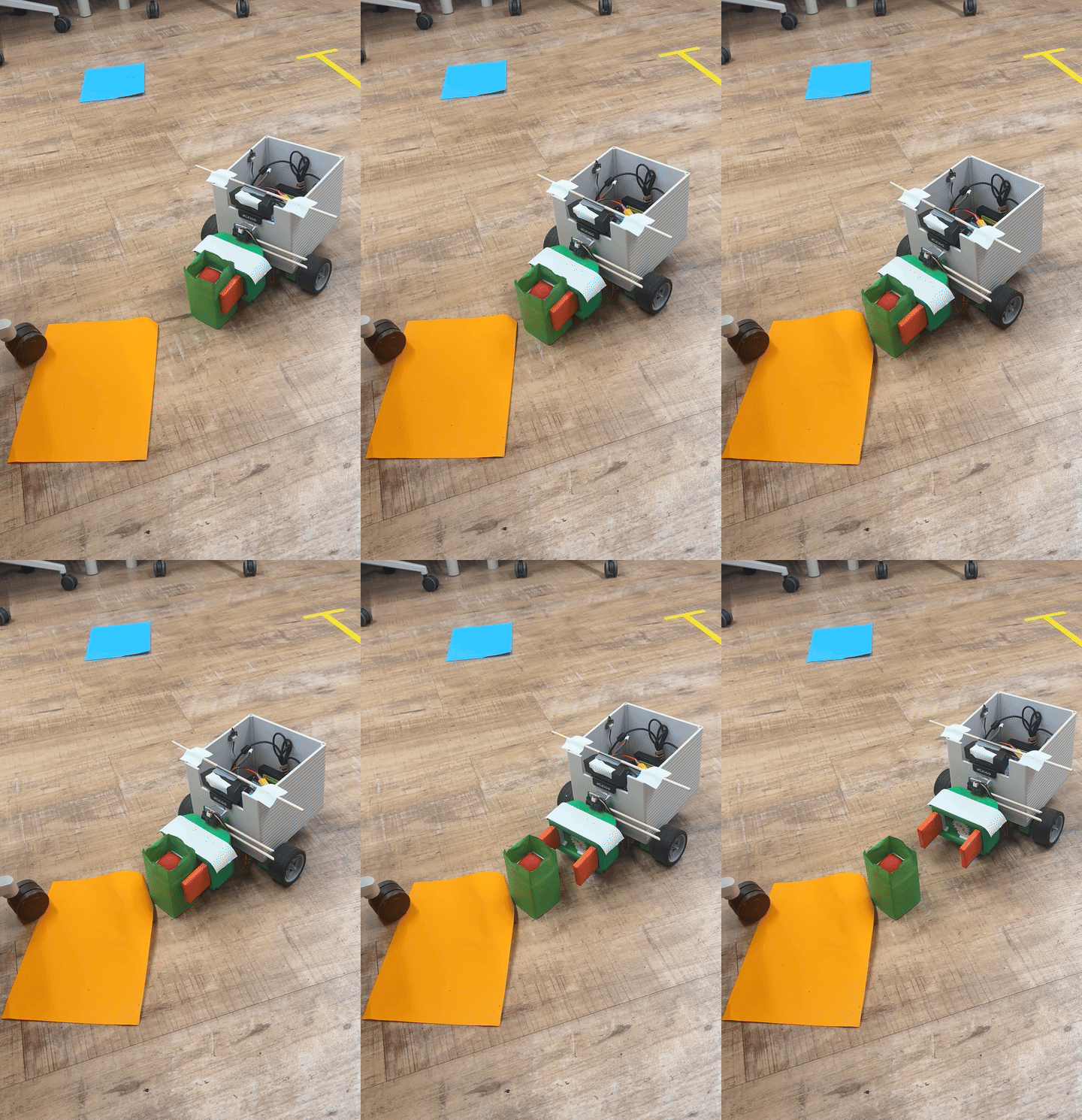
Autonomous Plant Mover Gripper v2
Clip 01

Plant Mover — Gripper v2

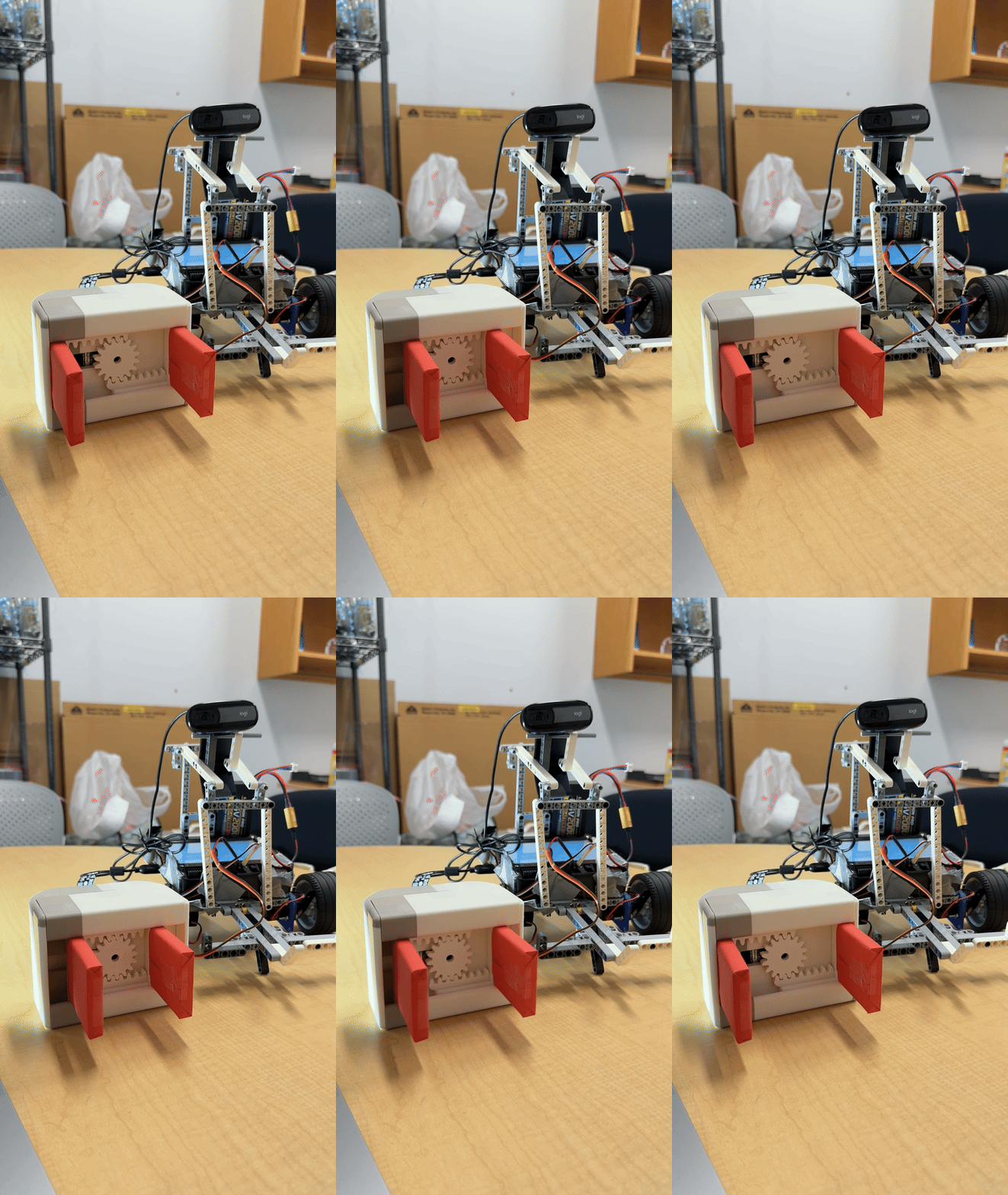
Earlier build stage — gripper v2 prototype before the final design was completed.
Autonomous Plant Mover Robot Final Build
Clip 02

Plant Mover — Final Build

Final build with the completed gripper design in operation.
Autonomous Lane-Following Robot
Clip 03

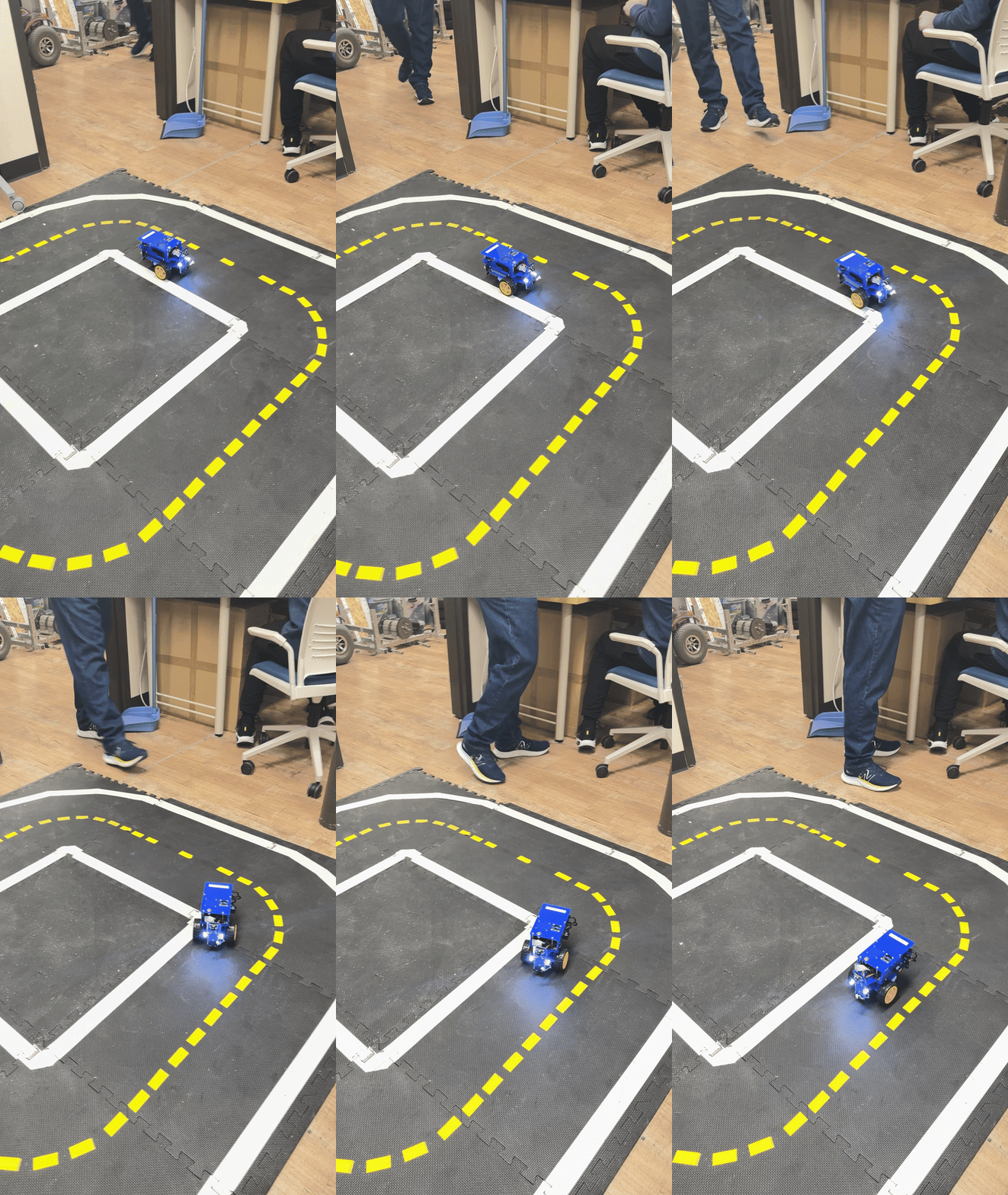
Lane-Following Robot

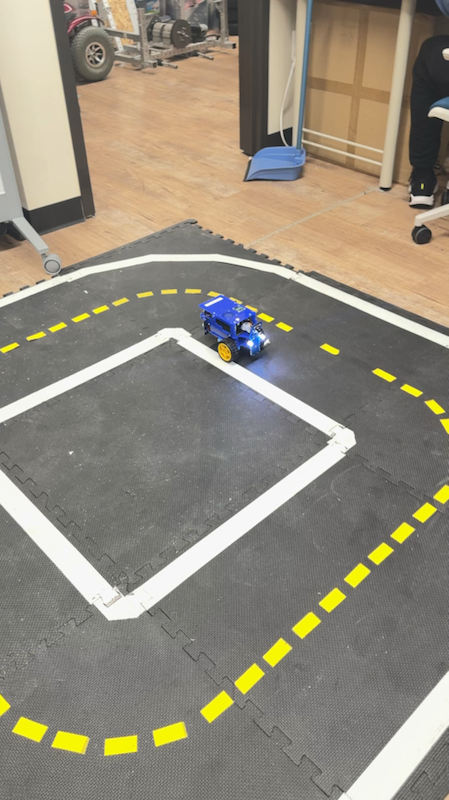
Duckiebot on a Jetson Nano. HSV lane detection and PID steering via OpenCV.
RRT Path Planning
Clip 04

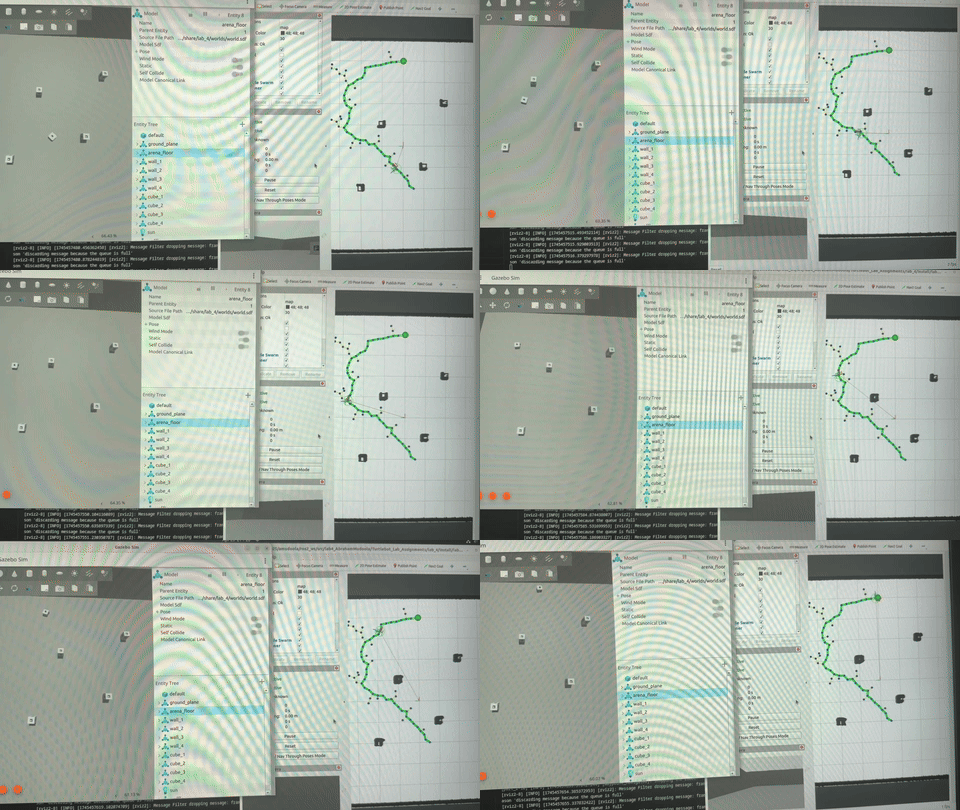
RRT Path Planning

RRT algorithm navigating a TurtleBot3 in Gazebo with live tree expansion.

Projects — Selected Work

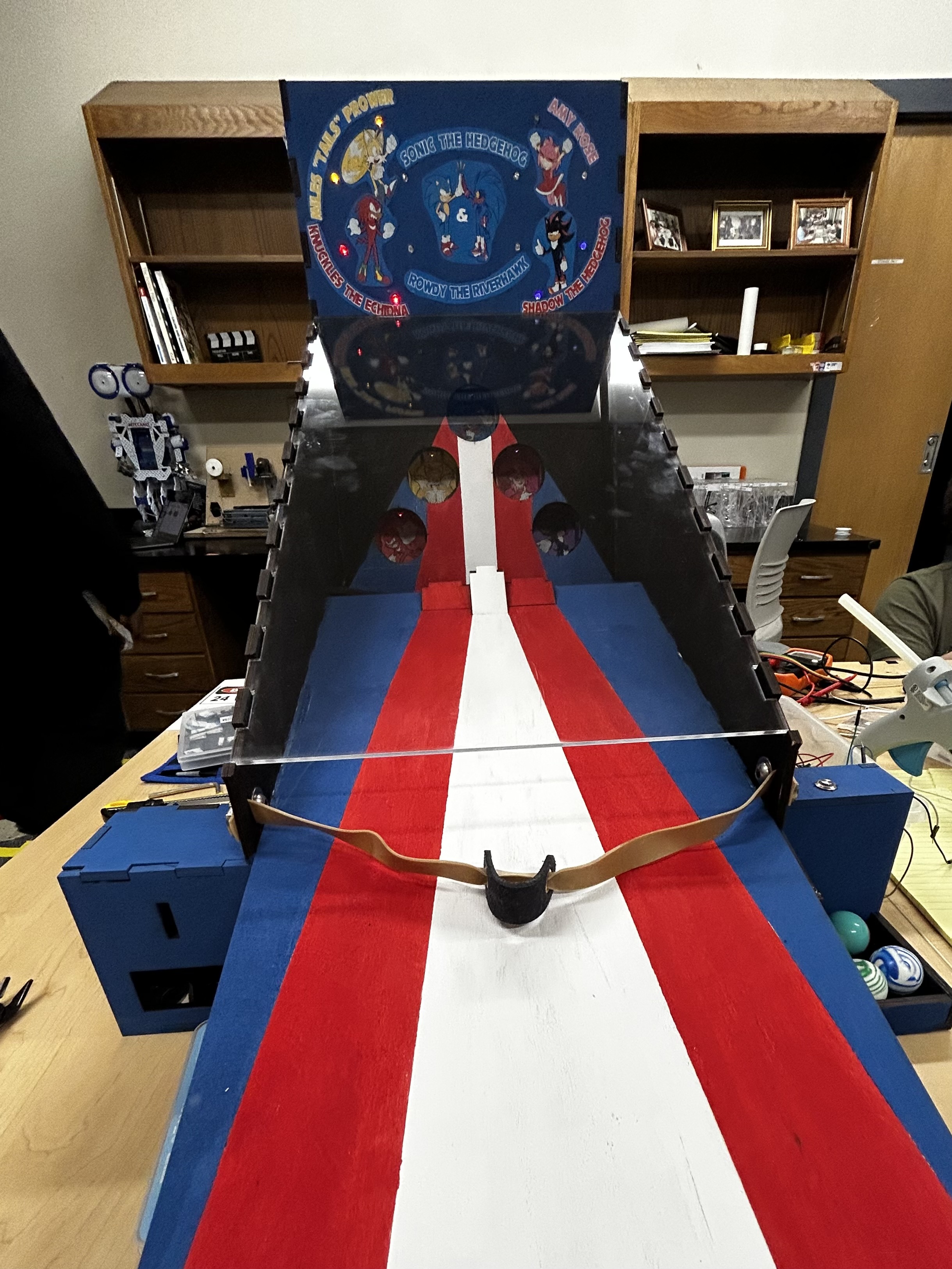
Skee-Ball machine

01 — Electromechanical Build

Tabletop
Skee-Ball
Machine

Tabletop Skee-Ball machine with a laser-cut plywood chassis and a clear acrylic cover to keep balls in play. Control logic runs on an Allen Bradley PLC — pneumatic actuators drive the internal ball mechanism, LEDs handle scoring feedback, and physical buttons manage user input.

PLC Ladder Logic Laser Cutting Pneumatics Wiring

Autonomous Plant Mover Robot

02 — Robotics / Computer Vision

Autonomous
Plant Mover
Robot

A robot designed to move houseplants toward better light as the sun shifts across a room. Built on a KIPR Wombat platform with a parallel gripper and full robot body designed from the ground up.

Vision is handled through color-based object detection — a lightweight approach suited to the Wombat's limited processing. The system tracks objects, centers them in frame, and uses the distance between two reference points as a proxy for depth. Light sensors measure ambient levels to determine when and where to move. The control software ties it together: detect the pot, align, grip, navigate, place.

Gripper actuation uses a servo motor; locomotion uses DC motors.

Robotics Computer Vision CAD Parallel Gripper KIPR Wombat Color Tracking
Autonomous Lane-Following Robot

03 — Autonomous Systems / ROS

Autonomous
Lane-Following
Robot

Duckiebot platform with an NVIDIA Jetson Nano running onboard. All software is built as Dockerized ROS nodes, developed across three labs for UML EECE 5560.

Lane detection uses a computer vision pipeline in OpenCV: frames from the compressed camera feed are converted to HSV, then color-masked separately for white and yellow lane boundaries. Canny edge detection is applied, followed by probabilistic Hough Transform (HoughLinesP) to extract lane lines. Detected lines are published as debug image topics for visualization.

AprilTag-based navigation is handled by two independent PID controllers — one for rotational alignment (centering the tag in frame) and one for distance approach — feeding velocity and omega commands directly to the lane controller node. FSM state integration ensures the robot only acts when in lane-following mode.

ROS OpenCV NVIDIA Jetson Nano Dual PID Control AprilTag Detection Hough Transform Docker Duckiebot
View Code on GitHub →

04 — Product Design / Additive Manufacturing

Compliant
Mechanism
Coffee Tamper

The brief was simple: design a coffee tamper. While on co-op and working heavily with 3D printers, compliant mechanisms were top of mind — and it raised an interesting question: what if the spring was just part of the print?

Rather than a standard design, the handle was built around a compliant mechanism that flexes under tamping load and returns to neutral — controlling the force applied to the grounds so each tamp is exact and repeatable. It prints as one piece, no separate spring needed. The result was a tamper that came together in just three parts: handle, base, and self-leveling collar.

Compliant Mechanism 3D Printing Product Design Design for Assembly Force Control Additive Manufacturing
Humanoid
Robots

05 — Software / Research

What Makes
Humanoid
Robots Hard

Built during the humanoid robotics boom to answer a simple question: why is this so hard? An interactive field guide mapping 8 core technical challenges across 5 real-world deployment contexts — factory, warehouse, healthcare, home, and construction.

Synthesized from McKinsey, Goldman Sachs, ARK Invest, IFR, and pilot data from actual industrial deployments. Also an exercise in building with AI — the site was coded up largely through AI-assisted development, exploring how far that workflow could take a solo project.

Humanoid Robotics Research Web Development AI-Assisted Coding Data Synthesis
View Live Site →
RRT path planning in action

06 — Software / Mobile Robotics

RRT Path
Planning &
Obstacle
Avoidance

Implemented the Rapidly-exploring Random Tree (RRT) algorithm from scratch in ROS 2 to navigate a TurtleBot3 to a goal while avoiding dynamic obstacles in Gazebo. Built as part of COMP.4500: Mobile Robotics I at UMass Lowell.

The planner subscribes to LIDAR scan data and builds a live 2D occupancy grid, marking obstacles with a buffered radius to account for robot geometry. The RRT tree expands through free space with collision checking at each step, extracts the optimal path, and publishes waypoints. A separate proportional-control node follows those waypoints — and when a new obstacle appears mid-route, the planner replans in real time and the robot resumes on the updated path. The full tree, path, and obstacle map are visualized live in RViz.

RRT Path Planning ROS 2 LIDAR Occupancy Grid Proportional Control Gazebo RViz

Abraham
Mudoola.

Industrial Engineering graduate from UMass Lowell with hands-on experience across the full build cycle — from concept and CAD to fabrication, electronics, and testing.

CAD 3D Printing OpenCV Laser Cutting Embedded Systems Design for Assembly GD&T ROS & ROS2 PLC Pneumatics Ladder Logic Allen-Bradley PLC

YouTube

@AbrahamMudola

LinkedIn

abraham-mudoola